


/file/publisher-c1a3f893382d2b2f8a9aa22a654d9c97/2025/04/ace03e92bb89269e532634ccbecdd7ee.jpg)

PM: US tariff maths flawed, no recession expected in M'sia
Prime Minister Anwar Ibrahim has criticised the US' decision to impose "reciprocal" tariffs on Malaysia, saying the math is flawed.
He also assured Malaysians that while the country's gross domestic product (GDP) target may need to be revised in light of the US trade action, the government does not foresee a recession happening.
Prime Minister Anwar Ibrahim has criticised the US' decision to impose "reciprocal" tariffs on Malaysia, saying the math is flawed.
He also assured Malaysians that while the country's gross domestic product (GDP) target may need to be revised in light of the US trade action, the government does not foresee a recession happening.
In a speech tonight, Anwar said the government rejected the US' claim that Malaysia had imposed a 47 percent tariff on US imports into the country.
"The basis for calculating this tariff is fundamentally flawed, which has inaccurately resulted in Malaysia being imposed a reciprocal tariff of 24 percent," he said.
On Wednesday, US President Donald Trump announced that all imports into the US would be slapped with a baseline 10 percent tariff effective April 5.
Starting April 9, the US will impose higher tariffs at "half" the purported amount that are imposed by other countries on US exports.
Trade deficit formula
Anwar did not elaborate on how the Trump administration's calculations were flawed, nor did he state the actual tariff rate Malaysia imposes on US exports.
However, economic journalist James Surowiecki deduced that instead of a complex formula, the US had simply divided the percentage of its trade deficits for other countries to determine the tariff rates.
According to US Census Bureau data reported by Politico, the US' trade deficit with Malaysia is at 47 percent - the figure alleged by the Trump administration as the country's tariff rate on US exports.
Half of that - or nearly half - is 24 percent, the reciprocal tariff rate set by the US.
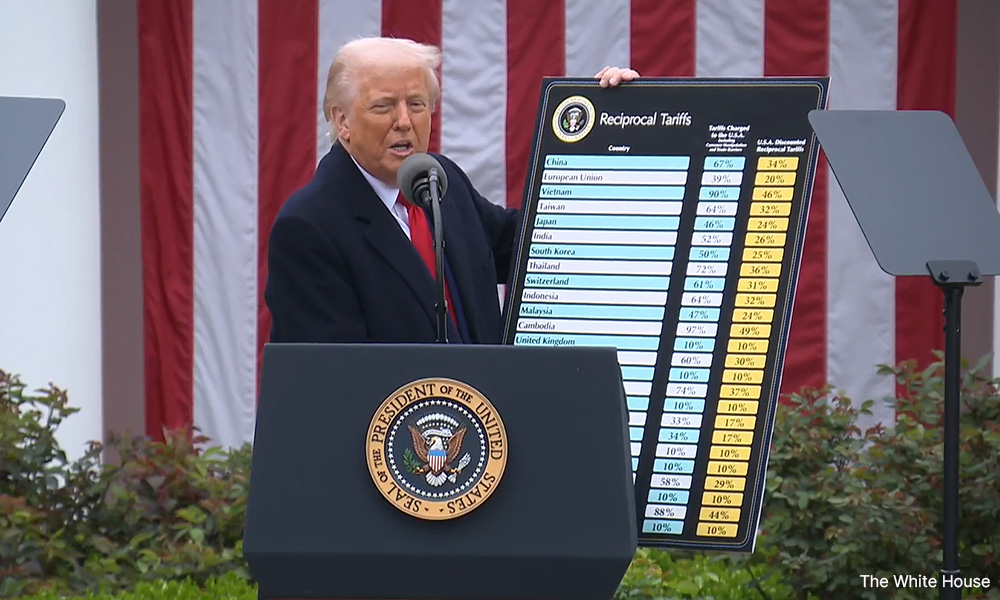
It had been suggested that the Trump administration may have used AI to determine its tariff formula, as multiple users found that platforms such as ChatGPT would furnish the same formula when asked how to calculate the reciprocal tariffs.
M’sia will keep calm
Anwar chastised the US decision as "a rejection of the principles of free, non-discriminatory, predictable and open trade under the World Trade Organization."
However, the prime minister said Malaysia's response will be calm, firm and guided by strategic interests.
"Our goal is clear. We are fully committed to securing a favourable resolution that preserves vital market access, attracts continued foreign investment, and supports the well-being of Malaysian workers and businesses.
"Malaysia will not introduce retaliatory tariffs," he said.
He said the government will be engaging with the US "constructively" with the Foreign Ministry and the Investment, Trade and Industry Ministry also set to do a detailed analysis, running simulations, and consulting stakeholders across industries.
The Investment, Trade and Industry Ministry will be submitting a detailed report on the impact of the tariffs this week, the prime minister added.
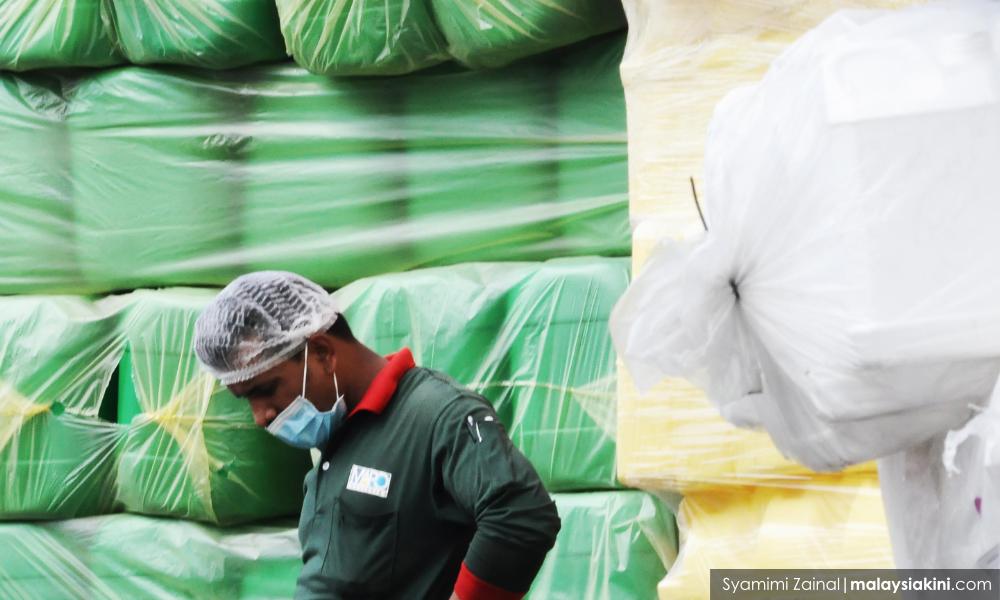
Anwar said some exemptions by the US will shield the semiconductor industry, but the textile, furniture, rubber, and plastics industries would be adversely impacted.
Diversified Asean network
Despite this, he assured that the economy will not head into a tailspin even if the projected GDP growth of 4.5 to 5.5 percent this year is revised.
"For now, let me reassure you that the government does not foresee a recession in Malaysia.
"Our economy remains resilient. Our macroeconomic foundations remain strong including our robust household spending, strong domestic investment, healthy tourism receipts, and the continued implementation of national masterplans.
"Our sound economic fundamentals, therefore, will enable us to weather this challenge from a position of strength and preparedness,' he said.
He added that Malaysia's trade does not hinge on the US alone thanks to a diversified network including Asean, the Comprehensive and Progressive Agreement for Trans-Pacific Partnership (CPTPP) and the Regional Comprehensive Economic Partnership (RCEP).
Anwar, however, acknowledged that the reciprocal tariffs may just be the beginning of greater challenges to come and that Malaysians must work together to weather storms ahead.
On the Asean level, Anwar said that Malaysia as this year’s chairperson will lead efforts to represent a united regional front and ensure that the bloc's voice is heard clearly and firmly while maintaining open and resilient supply chains.
/file/publisher-c1a3f893382d2b2f8a9aa22a654d9c97/2025/04/636d6b8ecd5e6c66786a0f9751196c3b.jpg)
/file/publisher-c1a3f893382d2b2f8a9aa22a654d9c97/2025/04/cd07f3a02d1bacb46c9dc8585ea64fc8.jpg)
/file/publisher-c1a3f893382d2b2f8a9aa22a654d9c97/2024/10/d397525e0970d77afb16280185db6da7.jpg)
/file/publisher-c1a3f893382d2b2f8a9aa22a654d9c97/2025/03/45b1f70bf58f7f85b7e3633cda7c3457.jpg)
/file/publisher-c1a3f893382d2b2f8a9aa22a654d9c97/2024/11/543fbd7ee0c031707a76510097169ff4.jpg)


Are you sure you want to delete this comment?
This action cannot be undone.